Close Menu

    Subscribe to Updates

    Get the latest creative news from FooBar about art, design and business.

    What's Hot

    How to Pay Off $20,000 of Debt in Canada in 12 Months on an Average Income

    June 9, 2026

    Cheapest Cities to Rent in Canada in 2026: A Province-by-Province Breakdown

    June 5, 2026

    Bi-Weekly vs. Monthly Budgeting in Canada: Which Method Saves More Money?

    June 1, 2026
    Facebook X (Twitter) Instagram
    Friday, June 12
    Frugal Living
    Facebook X (Twitter) Instagram YouTube
    • Home
    • Savings
      • Grocery & Food Savings
      • Housing & Utility Bills
    • Budgeting
      • Budget & Money Management
      • Debt & Credit
    • Benefits
      • Govt. Benefits & Tax Credits
    • Thrift Shopping
    • Frugal Living
      • Everyday Habits
      • Frugal Family Living
      • Frugal Transportation
      • Frugal Guides
    Frugal Living
    Home»Budget & Money Management»Bi-Weekly vs. Monthly Budgeting in Canada: Which Method Saves More Money?
    Budget & Money Management

    Bi-Weekly vs. Monthly Budgeting in Canada: Which Method Saves More Money?

    Grace ValdezBy Grace ValdezJune 1, 2026No Comments12 Mins Read
    Facebook Twitter Pinterest LinkedIn Tumblr Email
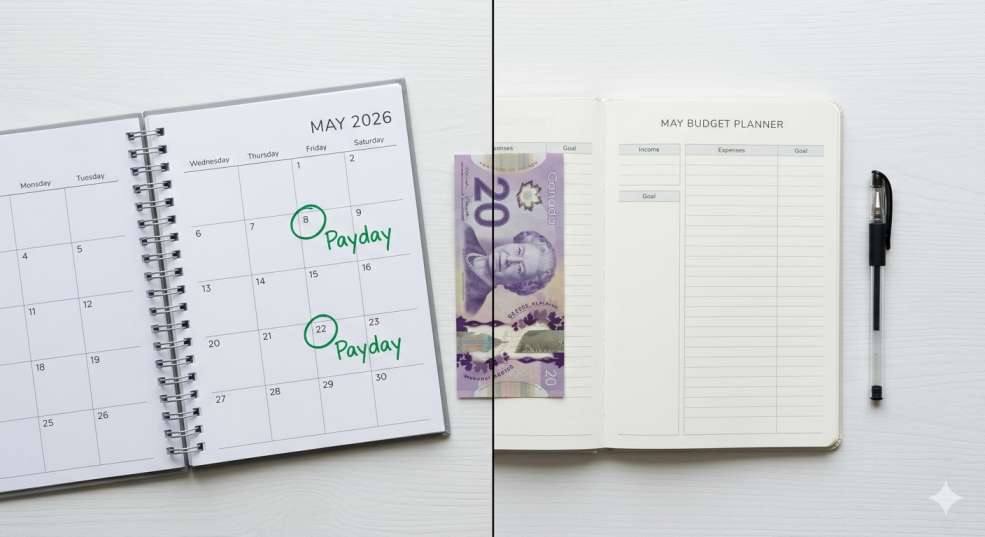
    Bi-weekly vs monthly budgeting Canada comparison with calendar and planner
    Share
    Facebook Twitter LinkedIn Pinterest Email Copy Link

    You get paid every two weeks. Your rent is due on the first of the month. Your phone bill comes out on the 20th. And somewhere in that shuffle, you’re trying to figure out why your savings account never seems to grow — even though, on paper, you should have money left over.

    Sound familiar? You’re not alone. According to Statistics Canada, approximately 43% of Canadian employees receive a bi-weekly paycheque. Yet most personal finance advice — budgeting apps, spreadsheet templates, and money books — is built around a monthly income model that simply doesn’t match how the majority of Canadians actually get paid.

    This disconnect isn’t just inconvenient. It’s quietly costing you money.

    In this article, we’re going to settle the debate once and for all: bi-weekly budgeting vs. monthly budgeting — which method actually saves more money for Canadians? We’ll walk through how each system works, show you the real math, cover the hidden advantages most people miss, and help you figure out which approach fits your life. Whether you’re trying to max out your TFSA, pay down a mortgage faster, or just stop living paycheque to paycheque, the budgeting method you choose matters more than you think.


    Understanding How Canadians Get Paid: The Foundation of Your Budget

    Before we compare budgeting methods, let’s make sure we’re on the same page about pay frequencies — because the terms often get confused.

    • Bi-weekly: You’re paid every two weeks — 26 paycheques per year. This is the most common pay frequency in Canada.
    • Semi-monthly: You’re paid twice per month on fixed dates (e.g., the 1st and 15th) — 24 paycheques per year.
    • Monthly: One paycheque per month — 12 per year. Less common in Canada, but some salaried or government employees are paid this way.


    Why does this distinction matter so much? Because bi-weekly workers receive 26 paycheques a year — not 24. That extra two paycheques’ worth of income (roughly 8.33% more than what 24 paydays would produce) is the cornerstone of one of the most powerful savings strategies available to Canadians. But you can only take advantage of it if your budget is built around your actual pay schedule.


    Monthly Budgeting: The Classic Approach

    How Monthly Budgeting Works

    The monthly budget is the gold standard of personal finance — and for good reason. It’s intuitive, it aligns with how most bills are structured, and it gives you a clean bird’s-eye view of your finances. You tally up your income for the month, subtract your expenses, and whatever’s left is yours to save or invest.

    The typical monthly budget follows a straightforward cycle: track all income arriving that month, list every expense due that month, allocate funds, and review at month’s end.

    The Pros of Monthly Budgeting

    • Simplicity: One budget cycle to manage instead of 26.
    • Alignment with most bills: Rent, utilities, subscriptions, and loan payments are almost always billed monthly.
    • Easier to track: Fewer data points to review, making it approachable for beginners.
    • Better for irregular income: Freelancers and self-employed Canadians often find monthly totals smoother to work with.


    The Cons of Monthly Budgeting for Bi-Weekly Earners

    • Cash flow mismatch: If most of your bills cluster in the first week of the month and you get paid on the 3rd and 17th, you can end up in a crunch before that second paycheque arrives.
    • You lose track of the ‘extra’ paycheques: In a purely monthly system, the two bonus paydays per year often feel like a windfall rather than a planned financial tool — and windfalls tend to disappear into spending.
    • It can mask overspending: Averaging income and expenses monthly can hide the fact that you overspend in specific weeks.

    Canada’s household saving rate sat at approximately 4.4% of disposable income as of Q4 2025, down from 5.2% the quarter prior, according to Statistics Canada. Choosing the right budgeting system can meaningfully move that needle for individual households.

    💡 QUICK STAT

    Bi-Weekly Budgeting: The Method Built for How Canadians Are Actually Paid

    How Bi-Weekly Budgeting Works

    Instead of planning your finances on a monthly basis, bi-weekly budgeting means aligning your budget with each paycheque cycle. Every two weeks, you sit down (or let your app do it automatically) and assign every dollar from that paycheque to a specific purpose before the next one arrives.

    The key mental shift: you’re not budgeting a month’s income — you’re budgeting 26 individual paycheques per year, each with a clear job to do.

    The 26-Paycheque System Explained

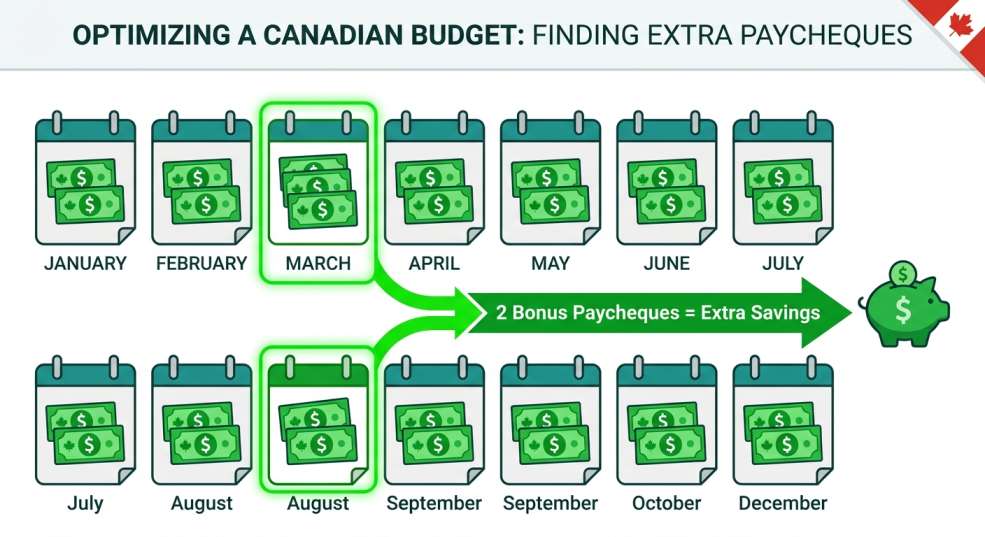
    Here’s the math that makes bi-weekly budgeting so powerful. In most months, you’ll receive two paycheques. But twice a year — typically in March and August for many pay cycles — you’ll have a three-paycheque month. If you budget only for 24 paycheques worth of expenses (as a monthly budget effectively does), those two ‘extra’ paycheques remain unallocated.

    What most Canadians do with unallocated money: spend it.

    What savvy bi-weekly budgeters do: direct those two extra paycheques entirely toward savings, TFSA contributions, RRSP top-ups, mortgage lump-sum payments, or debt elimination.

    26 bi-weekly paycheques per year in Canada showing two bonus months
    26 bi-weekly paycheques per year in Canada showing two bonus months.

    Real-World Example: The Sharma Family in Mississauga

    Let’s make this tangible. Take the Sharma family: two working adults in Mississauga, combined take-home pay of $8,800/month (or $4,400 per bi-weekly paycheque each, combined).

    Under a monthly budget, they allocate their $8,800 to fixed and variable expenses and save whatever is left at month’s end — which, after life gets in the way, is often $200-$400.

    Under a bi-weekly budget, each $4,400 combined paycheque has a specific plan. In the two ‘three-paycheque months’ of the year, that third $4,400 paycheque — which isn’t needed for any regular bills — goes entirely into savings. That’s $8,800 extra saved per year, just from being intentional about paycheque timing.


    TABLE 1: Bi-Weekly vs. Monthly Budgeting — Head-to-Head Comparison


    Feature

    Bi-Weekly Budgeting

    Monthly Budgeting

    Pay cycle alignment

    ✅ Perfect match for 43% of Canadians

    ⚠️ Requires manual conversion

    Number of budget cycles/year

    26

    12

    ‘Bonus’ paycheque strategy

    ✅ Built-in (2x/year)

    ❌ Easy to overlook

    Overspending detection

    ✅ Faster — caught within 2 weeks

    ⚠️ May not surface until month-end

    Setup complexity

    ⚠️ Slightly more effort upfront

    ✅ Simpler to start

    Best for debt repayment

    ✅ More frequent payment windows

    ⚠️ One opportunity per month

    Works with irregular income

    ⚠️ Can be tricky

    ✅ Better for variable earnings

    TFSA/RRSP automation ease

    ✅ Align transfers with paydays

    ✅ Works well either way

    Cash flow visibility

    ✅ High — weekly clarity

    ⚠️ Medium — monthly overview only

    Recommended for

    Salaried bi-weekly employees

    Self-employed, monthly earners

    The Real Savings Math: What the Numbers Actually Show

    Scenario 1: The Bi-Weekly Advantage on Debt Repayment

    One of the most dramatic demonstrations of bi-weekly power is mortgage repayment. This principle extends to any installment debt.

    Consider a $450,000 mortgage in Ontario at 4.5% interest amortized over 25 years. With monthly payments, you make 12 payments per year. Switch to accelerated bi-weekly payments (half the monthly amount paid every two weeks), and you effectively make 13 full payments per year — because 26 half-payments equals 13 full payments, not 12.

    The result? That mortgage is paid off approximately 3 years and 2 months faster, saving tens of thousands in interest. While this is specifically about mortgage payment frequency (not budgeting frequency), the same mathematical principle applies to how you structure and prioritize debt payments within a bi-weekly budget.

    Source: The mechanics of accelerated bi-weekly mortgage payments are well-documented by Canadian mortgage professionals and lenders. See LoanCalculator.ca for interactive examples.


    Scenario 2: TFSA Contributions — Timing Matters

    The 2026 TFSA contribution limit is $7,000 annually ($583/month). Under a monthly budget, many Canadians set up a $583/month auto-transfer — and that works fine. But bi-weekly budgeters can align their $269 bi-weekly contribution exactly with paydays, reducing the risk of the transfer bouncing if the timing is off, and taking advantage of those two extra paycheques to top up faster in bonus months.


    TABLE 2: Annual Savings Potential by Budgeting Method (Sample Canadian Household)

    Based on a household with $90,000 combined net annual income:


    Savings Category

    Monthly Budget (Typical)

    Bi-Weekly Budget (Optimized)

    Annual Difference

    Regular monthly savings

    $4,800/yr ($400/mo)

    $4,800/yr (same base)

    $0

    ‘Bonus paycheque’ capture

    $0 (unplanned)

    $4,500/yr (2 extra cheques)

    +$4,500

    Debt interest saved (accel. payments)

    Baseline

    Est. $600-$1,200/yr less interest

    +$600-$1,200

    Impulse spending reduction*

    Baseline

    Est. $300-$800 less/yr

    +$300-$800

    TOTAL ESTIMATED ADVANTAGE

    —

    —

    +$5,400-$6,500/yr

    *Impulse spending reduction is estimated based on the documented effect of shorter budget review cycles increasing spending awareness. Individual results will vary.
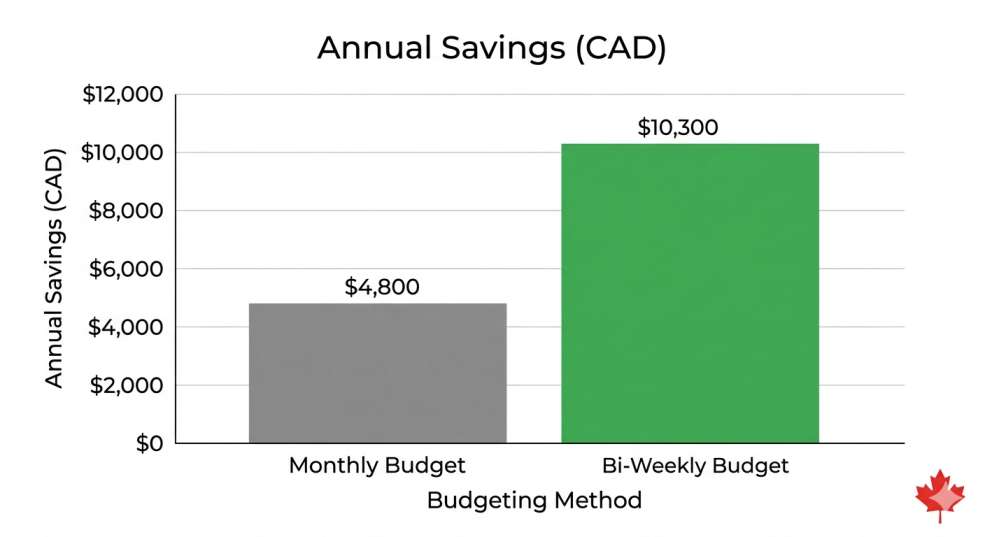

    Bar chart comparing annual savings between bi-weekly and monthly budgeting Canada
    Bar chart comparing annual savings between bi-weekly and monthly budgeting Canada.

    How to Set Up a Bi-Weekly Budget in Canada: A Practical Step-by-Step

    Step 1: Know Your Net Take-Home Per Paycheque

    This sounds obvious, but many Canadians budget on gross income. After federal tax, provincial tax, CPP contributions, EI premiums, and any workplace benefits deductions, your take-home can be 25-35% lower than your gross salary. Always start with your actual deposit amount.

    Step 2: Map Your Fixed Expenses to Specific Paycheques

    List every fixed bill and its due date. Then assign each bill to the paycheque that will cover it, based on timing. For example:

    • Paycheque 1 (1st of month area): Rent/mortgage, insurance, car payment
    • Paycheque 2 (mid-month): Utilities, streaming subscriptions, phone bill, gym

    This prevents the dreaded scenario where all your big bills cluster before your next payday.

    Step 3: Allocate Variable Expenses Per Paycheque

    Divide your monthly variable budget in half and assign it per pay period. Groceries, gas, dining out, and entertainment should each have a bi-weekly ceiling. Apps like YNAB (You Need A Budget), Mint, or a simple Google Sheet work well for this.

    Step 4: Build a One-Month Buffer

    The biggest practical challenge of bi-weekly budgeting is timing mismatches — a big bill falling on day 13 of a 14-day pay cycle. The solution: build a one-month buffer in your chequing account. Use your very first bonus paycheque to establish this buffer. From that point on, you’re always spending ‘last paycheque’s money,’ eliminating timing anxiety entirely.

    Source: This buffer strategy is recommended by Canadian debt counsellors at Spergel  and Waypoint Budget .

    Step 5: Designate Your Bonus Paycheques in Advance

    Identify the two months this year when you’ll receive three paycheques (check your pay schedule). Before those months arrive, decide exactly where that money goes — TFSA, RRSP, emergency fund, mortgage lump sum, or FHSA if you’re saving for a first home. The decision should be made in advance, not in the moment.

    Step 6: Review Every Two Weeks, Not Every Month

    The review cycle is where bi-weekly budgeting earns its keep. Every two weeks, spend 15 minutes checking: Did I stay within my variable spending? Are my savings transfers on track? Any irregular expenses coming up next cycle (a birthday, annual insurance renewal, car maintenance)?


    When Monthly Budgeting Is Actually the Better Choice

    Bi-weekly budgeting wins on savings potential for most salaried Canadians — but it’s not universally superior. Monthly budgeting makes more sense if:

    • You’re self-employed or have variable income. Monthly totalling smooths out the variability better than a system expecting consistent bi-weekly amounts.
    • You’re paid monthly or semi-monthly on fixed dates (1st and 15th). There’s no 26-paycheque advantage if you don’t receive 26 paycheques.
    • You’re just starting your budgeting journey. The simplicity of a monthly system means you’re more likely to stick with it. A budget you follow imperfectly beats a perfect budget you abandon.
    • Your household has complex, irregular income streams — rental income, investment distributions, commission — that don’t align neatly with bi-weekly cycles.

    Don’t forget to account for Canadian seasonal financial events in either budgeting system: GST/HST credit quarters (January, April, July, October), Canada Child Benefit monthly deposits, RRSP contribution deadline (60 days after December 31), and the spring and fall property tax instalments common in many municipalities. These lumpy cash flows benefit from being pre-planned regardless of your budgeting frequency.

    🍁 Canadian-Specific Consideration
    Canadian person budgeting at home on laptop with coffee.

    Bi-Weekly vs. Monthly Budgeting: The Verdict

    For the majority of Canadians — particularly those receiving bi-weekly paycheques from an employer — bi-weekly budgeting has a measurable financial edge. The reasons are structural, not motivational:

    • It captures the 26th paycheque instead of letting it evaporate.
    • It creates more frequent accountability checkpoints.
    • It aligns with how money actually flows in your bank account.
    • It makes debt repayment and savings contributions more efficient.


    Monthly budgeting remains a solid, time-tested approach — especially for those with irregular income or those new to budgeting. But if you’re being paid bi-weekly and using a monthly budget, you’re essentially fitting a square peg into a round hole. You’re working against your own pay cycle.

    The good news: switching isn’t complicated. You don’t need a new app or a financial planner. You need to map your bills to your paydays, identify your two bonus months, and decide in advance where that extra money goes. That single decision — made once — can put thousands of extra dollars into your TFSA or against your mortgage every year.

    Canadian couple reviewing budget together feeling confident about savings.

    Key Takeaways

    • 43% of Canadian employees are paid bi-weekly — yet most budgeting tools are designed for monthly earners.
    • Bi-weekly budgeting aligns your financial plan with your actual pay cycle, eliminating cash flow timing problems.
    • The 26-paycheque system gives bi-weekly earners two ‘bonus’ paycheques per year — worth thousands if directed intentionally.
    • For a household earning $90K net, bi-weekly budgeting can generate $5,400–$6,500 more in annual savings vs. a typical monthly approach.
    • Monthly budgeting remains better for self-employed Canadians, those with variable income, or absolute beginners.
    • The best budget is the one you’ll actually use — start simple, then optimize as your habits solidify.


    DISCLAIMER

    The information provided in this article is for general educational and informational purposes only and does not constitute financial, tax, investment, or legal advice. The scenarios, calculations, and examples presented are illustrative and based on publicly available data; actual results will vary depending on individual circumstances, income, expenses, interest rates, and financial goals. FrugalLiving.ca is not a licensed financial advisor, mortgage broker, or tax professional. Readers are strongly encouraged to consult with a qualified financial planner, accountant, or other licensed professional before making any significant financial decisions. References to external websites (Statistics Canada, Spergel, Waypoint Budget, LoanCalculator.ca) are provided for informational purposes; FrugalLiving.ca does not endorse or guarantee the accuracy of third-party content. TFSA and RRSP contribution limits, tax rules, and government benefit amounts are subject to change — always verify current figures with the Canada Revenue Agency (CRA) at canada.ca.

    bi-weekly budget bi-weekly paycheque budget tips budgeting Canada Canadian personal finance frugal living Canada how to save money Canada monthly budget pay cycle budgeting RRSP budget TFSA savings
    Share. Facebook Twitter Pinterest LinkedIn Tumblr Email
    Grace Valdez
    • Pinterest
    • Instagram

    Grace Valdez is a Toronto-based blogger dedicated to helping and navigating life in Canada. She writes practical, easy-to-follow guides on everything from frugal living, settling into Canadian banking and budgeting, to other related topics. Grace's warm, no-jargon writing style has made her a trusted online resource for thousands of readers building in Canada.

    Related Posts

    How to Pay Off $20,000 of Debt in Canada in 12 Months on an Average Income

    June 9, 2026

    Cheapest Cities to Rent in Canada in 2026: A Province-by-Province Breakdown

    June 5, 2026

    How to Negotiate Your Rent Renewal in Canada (Scripts and Tips That Work)

    May 28, 2026
    Leave A Reply Cancel Reply

    Support Canada.
    Stay In Touch
    • Facebook
    • Twitter
    • Pinterest
    • Instagram
    • YouTube
    • Vimeo
    Don't Miss
    Debt & Credit

    How to Pay Off $20,000 of Debt in Canada in 12 Months on an Average Income

    By Grace ValdezJune 9, 2026

    If you’re staring down $20,000 in debt — whether it’s credit card balances, a personal…

    Cheapest Cities to Rent in Canada in 2026: A Province-by-Province Breakdown

    June 5, 2026

    Bi-Weekly vs. Monthly Budgeting in Canada: Which Method Saves More Money?

    June 1, 2026

    How to Negotiate Your Rent Renewal in Canada (Scripts and Tips That Work)

    May 28, 2026

    Subscribe to Updates

    Get the latest creative news from SmartMag about art & design.

    About Us
    About Us

    Practical frugal living tips for Canadians — save money on groceries, housing, utilities, and everyday life. Real advice built for Canada's cost of living.

    Email Us: admin@frugalliving.ca

    Facebook X (Twitter) Pinterest YouTube WhatsApp
    Our Picks

    Bi-Weekly vs. Monthly Budgeting in Canada: Which Method Saves More Money?

    June 1, 2026

    The Envelope Budget Method Explained for Canadians: Does It Still Work in 2026?

    May 16, 2026

    How to Cut Your Subscription Costs in Canada: A Step-by-Step Audit Guide

    May 12, 2026
    Most Popular

    How to Pay Off $20,000 of Debt in Canada in 12 Months on an Average Income

    June 9, 2026

    Cheapest Cities to Rent in Canada in 2026: A Province-by-Province Breakdown

    June 5, 2026

    Bi-Weekly vs. Monthly Budgeting in Canada: Which Method Saves More Money?

    June 1, 2026
    • About Us
    • Privacy Policy
    • Disclaimer
    • Get In Touch
    © 2026 Brought to you by Kabayan Business.

    Type above and press Enter to search. Press Esc to cancel.

    Powered by
    ►
    Necessary cookies enable essential site features like secure log-ins and consent preference adjustments. They do not store personal data.
    None
    ►
    Functional cookies support features like content sharing on social media, collecting feedback, and enabling third-party tools.
    None
    ►
    Analytical cookies track visitor interactions, providing insights on metrics like visitor count, bounce rate, and traffic sources.
    None
    ►
    Advertisement cookies deliver personalized ads based on your previous visits and analyze the effectiveness of ad campaigns.
    None
    ►
    Unclassified cookies are cookies that we are in the process of classifying, together with the providers of individual cookies.
    None
    Powered by