


There’s a reason so many Canadians dread buying a used car. The market can feel like a minefield — overpriced listings, shady sellers, hidden damage, and paperwork that seems designed to confuse you. Yet with the average used car price in Canada hovering around $38,000 (up from $26,331 in 2019, according to National Post data), the stakes have never been higher.
But here’s the good news: buying a used car in Canada without getting ripped off is entirely achievable — if you know exactly what to look for. In this guide, you’ll get a practical, no-fluff roadmap that covers everything from keyword-optimized research tactics to CARFAX reports, negotiation strategies, and province-specific tax gotchas that trip up even experienced buyers.
Whether you’re a first-time buyer or someone who’s been burned before, this guide is your complete playbook for coming out ahead.
The single biggest mistake Canadian used car buyers make is skipping the independent pre-purchase inspection. A $150–$200 mechanic check can save you $5,000+ in surprise repairs.
💡 FrugalLiving.ca Quick Take
Step 1: Set a Realistic Budget — The Canadian Way
Before you browse a single AutoTrader listing, you need a firm budget. And in Canada, your budget isn’t just the purchase price — it’s a bundle of costs that many first-timers completely overlook.
True Cost of Ownership Breakdown
Purchase Price: The obvious one. But note that prices are negotiable — don’t anchor to the listed price.
Taxes: This varies massively by province (see the tax table below). In Ontario, you’ll pay 13% HST on used vehicles — on the higher of the purchase price or the UVIP book value. In Alberta, there’s no provincial sales tax. These differences can add thousands to your total.
Insurance: Get quotes before you buy. Some vehicles (especially newer SUVs and certain import models) can cost significantly more to insure. In Ontario, average premiums run $1,500–$2,000/year.
Registration & Licensing: Ranges from roughly $60–$150 depending on your province and vehicle weight.
Potential Repairs: Budget a contingency fund of $500–$1,500 even on a vehicle that passes inspection. Used cars come with wear and tear.
Financing Costs: If you’re financing through a dealer, expect used car rates between 4.99% and 9.99% depending on your credit score. Always compare with your bank or credit union first.
A good rule of thumb for frugal buyers: your total out-the-door cost (including taxes and fees) should be no more than 20–25% of your annual gross income.
TABLE 2: Used Car Tax by Province in Canada (Approximate, 2025)
Province | PST / RST on Used Cars | GST (5%) | Notes |
Ontario | 13% HST (private) | Included in HST | Based on higher of purchase price or UVIP value |
British Columbia | 12% PST | No GST (private sale) | PST based on higher of price or ICBC value |
Alberta | No PST | 5% GST (dealer only) | Most tax-friendly province |
Quebec | 9.975% QST | 5% GST (dealer only) | Based on estimated value, not sale price |
Manitoba | 7% RST | 5% GST (dealer only) | RST based on Black Book value |
Saskatchewan | 6% PST | 5% GST (dealer only) | PST on private and dealer sales |
Source: Provincial government websites. Always verify current rates before purchase, as tax rules change.
Step 2: Research the Right Vehicle — Used Car Buying Tips for Canadian Buyers
Once you have a budget, it’s time to find vehicles that match your needs. This step is where informed buyers save the most money.
Where to Research Used Cars in Canada
AutoTrader.ca: The largest used car marketplace in Canada. Use filters aggressively — set a maximum price, mileage cap (most reliable buyers target under 100,000 km), and specific model years.
Kijiji Autos: Great for private sale listings, often at lower prices. More buyer beware, however.
Canadian Black Book (canadianblackbook.com): Use this to check fair market value for any vehicle you’re considering. It’s Canada’s equivalent of Kelley Blue Book and will tell you if a seller is overcharging.
CarGurus.ca: Provides a price rating (Good Deal / Fair / Overpriced) based on market data. Excellent for quickly filtering out inflated listings.
Picking the Right Make and Model
For frugal buyers, reliability and low ownership costs matter as much as price. The Toyota Corolla, Honda Civic, and Toyota RAV4 consistently rank among the most reliable and lowest-cost-to-own used vehicles in Canada. They hold their value well, which means resale is strong too. Avoid models known for expensive repairs — a quick search on forums or Consumer Reports will reveal common problem years.
Aim for vehicles that are 3–5 years old with 50,000–100,000 km. According to data from Canadian used car market sources, the sweet spot is typically a vehicle that’s taken its biggest depreciation hit but still has significant useful life ahead.

Step 3: Understand Who You’re Buying From
In Canada, there are three main ways to buy a used car, and each comes with very different levels of risk and protection.
TABLE 1: Comparing Used Car Buying Options in Canada — Private Seller vs. Dealer vs. Certified Pre-Owned
Feature | Private Seller | Used Car Dealer | Certified Pre-Owned (CPO) |
Price | Lowest (no markup) | Mid-range | Highest (10–15% premium) |
Warranty | None | Short dealer warranty (varies) | Full manufacturer warranty |
Consumer Protection | Minimal — buyer beware | Provincial dealer regulations | Strongest — OEM-backed |
Inspection | Up to buyer to arrange | Basic safety cert only | Multi-point OEM inspection |
CARFAX Provided? | Rarely | Usually on request | Always included |
Financing Options | None (pay in full) | Third-party lenders | OEM financing available |
Best For | Budget buyers, mechanical know-how | Middle ground, moderate budget | Peace of mind, near-new quality |
Note: CPO availability depends on manufacturer and vehicle age. Typically limited to vehicles 5 years old or newer with under 100,000 km.
Watch Out for Curbsiders
One of the most pervasive scams in the Canadian used car market is “curbsiding” — unlicensed dealers posing as private sellers to avoid taxes, consumer protection laws, and dealer regulations. According to CARFAX Canada, approximately 25% of vehicles listed as “for sale by owner” online are actually being sold by curbsiders.
Red flags: the seller has multiple vehicles listed, the registration isn’t in their name, they insist on cash only, and they want to meet in a public place rather than their home. If something feels off, trust your gut and walk away.
If a private seller has more than one car for sale at a time, claims to be “selling it for a friend,” or can’t show you the vehicle at a residential address — you’re likely dealing with an unlicensed dealer. These sellers carry none of the consumer protections of a registered dealership.
⚠️ Curbsider Alert
Step 4: Run a CARFAX Canada Report — Non-Negotiable
A CARFAX Canada Vehicle History Report is the single most important document you can obtain before buying any used vehicle in Canada. It costs around $50–$70 for a single report from carfax.ca, or is often provided free by reputable dealers.
What a CARFAX Canada Report Reveals
Odometer history: This is critical. CARFAX logs mileage over time — any decrease in recorded mileage is a major red flag. Odometer fraud is a growing problem in Canada and globally. According to CARFAX data published in December 2024, over 2.14 million vehicles in North America may have had their odometers rolled back — up over 18% since 2021. A CBC Go Public investigation from May 2025 highlighted a Canadian buyer who purchased a 2012 Subaru believing it had under 98,000 km, only to discover the odometer had been rolled back more than 50,000 km.
Accident and damage history: See if the vehicle has been in reported collisions and whether insurance claims were filed.
Lien status: If the previous owner still owes money on the vehicle, that debt could become your problem. Never complete a purchase without confirming there are no outstanding liens.
Ownership and registration history: Frequent province changes can indicate title washing — a scam where sellers move vehicles across provinces to erase negative history like flood damage or a salvage title.
Open recalls: Many Canadians don’t realize their vehicle has unfixed safety recalls. CARFAX can show these (though not all manufacturers share recall data — always double-check at tc.gc.ca).
Important caveat: CARFAX is excellent, but it’s not foolproof. Not all incidents are reported to CARFAX. A clean CARFAX report does not guarantee a clean car — which is exactly why Step 5 is just as important.
🔗 Check VIN history: CARFAX Canada (carfax.ca) | Free basic VIN check available.
Step 5: Always Get a Pre-Purchase Inspection (PPI)
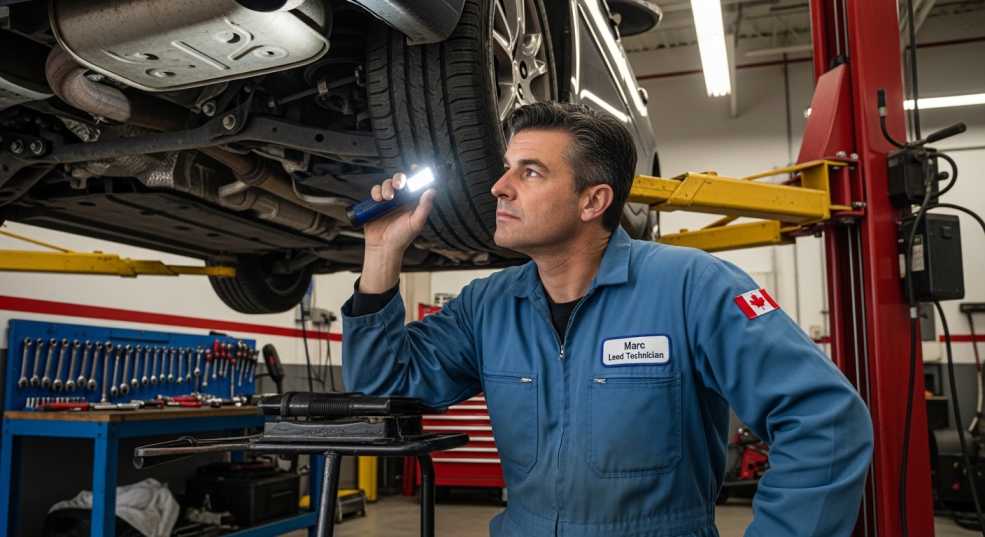
Even if the CARFAX report comes back spotless, you should always have a qualified independent mechanic inspect the vehicle before you buy. This is called a Pre-Purchase Inspection (PPI), and it’s probably the best $150–$200 you’ll ever spend.
How to Arrange a PPI
You can take the vehicle to any licensed mechanic of your choosing — not the seller’s preferred shop. Many mobile inspection services (like Greasemonkey Inspectors in Ontario) will come to the seller’s location. The seller has no obligation to allow this, but any legitimate seller will understand and agree. If a seller refuses an independent inspection, walk away immediately.
What a Good Mechanic Will Check
Engine and transmission: Look for oil leaks, worn belts, unusual noises, and signs of overheating.
Rust and corrosion: Canadian winters are brutal on vehicles. Check the underbody, wheel wells, and frame — especially on vehicles from Ontario and Eastern Canada where road salt is heavy.
Brakes and suspension: Worn pads, warped rotors, and suspension play are common and costly on higher-mileage vehicles.
Fluids and seals: Old, dirty, or milky fluids can indicate neglect or serious engine issues.
Body panel alignment: Uneven gaps between panels can indicate previous accident repairs not reflected in the CARFAX report.
OBD-II diagnostic scan: A mechanic plugs in a diagnostic tool to check for stored fault codes — even ones that don’t trigger a dashboard warning light.
If the mechanic finds $1,500 in recommended repairs, use that list as a negotiating tool. Ask the seller to either fix the issues before purchase, reduce the price accordingly, or split the difference. Many sellers will accommodate reasonable requests — especially if they’re motivated to sell.
PRO TIP
Step 6: Negotiating the Best Price — Used Car Buying Tips That Work
Negotiation is where frugal buyers can really shine. Canadians are often reluctant to negotiate — but in the used car market, it’s not just acceptable, it’s expected.
Do Your Homework First
Before entering any negotiation, know the market value of the exact vehicle — same year, mileage bracket, trim level, and condition — using Canadian Black Book, AutoTrader comparables, and CarGurus pricing data. If a seller is asking $18,000 and every comparable vehicle is listed at $15,500–$16,000, you have a strong opening.
Negotiation Tactics That Actually Work in Canada
Start low, not insultingly low: Offer 5–10% below asking price. This gives room to meet in the middle and signals that you’re a serious, prepared buyer.
Use the inspection report: Any issues flagged by your mechanic become leverage. “Your mechanic found the front brakes need replacing at $400 — I’d like to reflect that in the price.”
Point to comparable listings: Print or screenshot similar vehicles at lower prices. “I found two identical 2020 RAV4s with similar mileage for $1,500 less — can you match that?”
Be willing to walk away: This is your most powerful tool. If you seem desperate, sellers sense it. Saying “I need to think about it” — and meaning it — often prompts price reductions.
Negotiate the total, not just the sticker: At dealerships, watch for add-ons (extended warranties, paint protection, admin fees) that can quietly inflate the price. Everything is negotiable.
When Is the Best Time to Buy?
Late fall and winter (November through February) tend to offer the best deals in Canada. Demand is lower, sellers are more motivated, and dealers are trying to clear inventory before year-end. Avoid shopping in spring and summer when demand for AWD/SUVs spikes and prices follow.
Step 7: Know the Paperwork — Province by Province
This is where a lot of used car deals in Canada go sideways. Every province has its own documentation requirements, and mixing them up can cost you.
Documents You Need in Every Province
Bill of Sale: A written agreement between buyer and seller stating the purchase price, vehicle details (year, make, model, VIN), and the date of sale. Always get this in writing, signed by both parties.
Vehicle Title / Ownership Document: Confirms the seller actually owns the vehicle. Verify it matches the VIN on the car and the seller’s ID.
CARFAX or Vehicle History Report: As discussed above.
Lien Release (if applicable): If the CARFAX shows an outstanding lien, require written confirmation from the lender that the debt has been cleared before transfer.
Ontario-Specific: The UVIP
In Ontario, private sellers are legally required to provide a Used Vehicle Information Package (UVIP), available from ServiceOntario. This document includes the vehicle’s registered ownership history, lien status, and an estimated retail value — which the province uses to calculate the tax you owe. Tip: Ontario charges RST (retail sales tax) on the higher of the actual purchase price or the UVIP value, so a suspiciously low purchase price won’t reduce your tax bill.
British Columbia: Autoplan Transfer
In BC, vehicle transfers are handled through ICBC Autoplan brokers. The PST is based on the higher of the declared purchase price or the vehicle’s book value as determined by ICBC. Both parties should attend a licensed Autoplan broker together when transferring ownership.
Step 8: Red Flags to Walk Away From — Canada-Specific Scams
Even the most prepared buyer can be targeted by a crafty seller. Here’s a quick reference of the most common used car scams in Canada and what to do when you spot them.
Top Red Flags in the Canadian Used Car Market
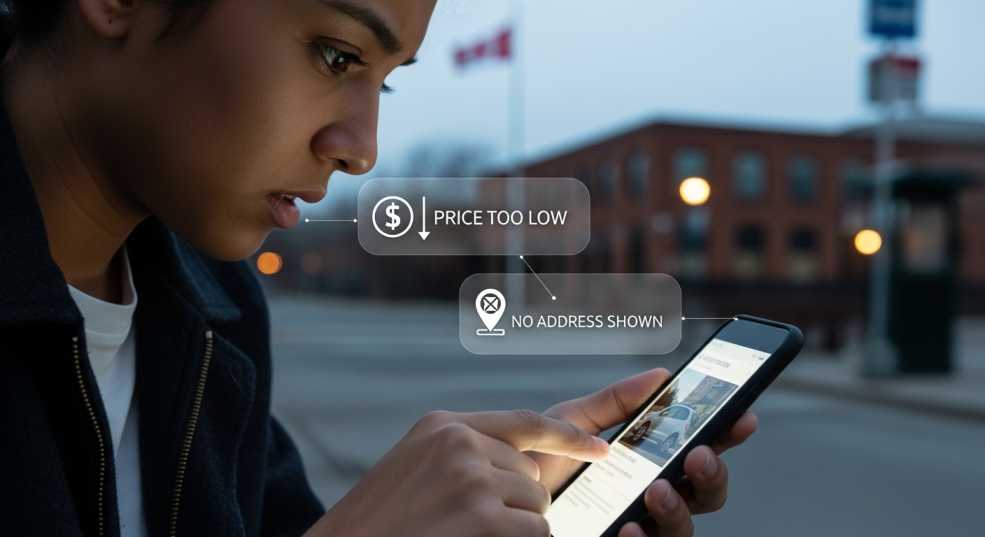
Price too good to be true: If a 2020 Honda CR-V with 60,000 km is listed for $12,000 when market value is $22,000, something is very wrong. Either the car is stolen, flood-damaged, rebuilt title, or the listing is an outright scam.
Seller won’t meet at their home address: Legitimate private sellers live somewhere. A seller who insists on meeting in a grocery store parking lot is likely a curbsider hiding their identity.
Refuses pre-purchase inspection: No honest seller with a good vehicle will turn down a legitimate inspection request.
Multiple vehicles listed from one person: Private sellers don’t usually sell 4 cars at the same time.
Requests wire transfer or crypto payment: These are untraceable and unrecoverable. Use a bank draft or cash (with a proper receipt) for private sales, never e-Transfer for large amounts to strangers.
Cash only, no receipts: If they won’t provide a signed bill of sale with their real name and address, you have no recourse if problems arise.
Odometer mismatch: Compare the current odometer reading to the CARFAX history. Also check wear patterns — a car with 60,000 km shouldn’t have a worn-out steering wheel and pedals.
Title washing is a growing fraud where sellers move a vehicle through multiple provinces to erase a “salvage” or “rebuilt” brand from its history. Always run a CARFAX report AND verify the title directly with your provincial authority before buying.
🚨 Scam Alert
Step 9: Financing a Used Car in Canada
If you can’t pay cash outright, financing is a reality for most Canadian used car buyers. Here’s how to do it smart.
Compare Before You Commit
Never accept the dealer’s financing offer without first checking rates from your bank or credit union. Credit unions in particular often offer lower rates than dealer-arranged financing. Get a pre-approved car loan amount and rate before you shop — this puts you in a cash-like negotiating position and protects you from “payment-focused” selling tactics where dealers stretch your term to mask a high rate.
Used Car Financing Red Flags
“What can you afford per month?” This question is a trap. Dealers can stretch a loan to 96 months to make a $28,000 car seem affordable at $299/month. Focus on the total cost, not the monthly payment.
Yo-yo financing: You sign and drive away, then the dealer calls days later saying financing fell through and demands more money or a higher rate. This is illegal but still occurs. Read every document before signing.
Add-on products: Extended warranties, paint protection, credit insurance, and similar products are typically overpriced and aggressively pushed. You don’t need most of them — or can buy them cheaper elsewhere.
Step 10: After You Buy — Final Steps for Canadian Used Car Buyers
Congratulations — you’ve negotiated a fair deal and signed the paperwork. Here’s what comes next.
Register the vehicle: Visit ServiceOntario (or your provincial equivalent) within 10 days of purchase in most provinces. You’ll need the bill of sale, signed ownership, and proof of insurance.
Get insurance before you drive: In Canada, you legally cannot drive an uninsured vehicle. Have your insurance paperwork in order before taking possession.
Change the oil: Regardless of what the seller says, change the oil on a used vehicle as soon as you take ownership. It’s cheap peace of mind.
Get a full service inspection: Have your mechanic do a complete service — filters, fluids, belts, tires — so you’re starting fresh and know exactly what maintenance is due.
File the transfer paperwork immediately: Don’t delay the ownership transfer. Until it’s done, the vehicle is still legally tied to the previous owner.
Conclusion: Buy Smart, Buy Frugal
Buying a used car in Canada without getting ripped off comes down to preparation, patience, and knowing exactly where the risks lie. The Canadian market has its own unique landscape — provincial tax quirks, curbsiders operating in grey markets, and a rising tide of odometer fraud that even digital dashboards can’t stop.
But with a firm budget, thorough research, a CARFAX report, an independent mechanic inspection, and sharp negotiation skills, you’re miles ahead of the average buyer. The frugal path isn’t about being cheap — it’s about being informed.
Follow the ten steps in this guide, use the comparison tables as quick reference points, and don’t let excitement override diligence. A reliable used car at a fair price is absolutely achievable in Canada. You just have to go in with your eyes open.
 Key Takeaways: 1) Budget for the full true cost including provincial taxes. 2) Research market value using Canadian Black Book before negotiating. 3) Always run a CARFAX Canada report. 4) Get an independent pre-purchase inspection — no exceptions. 5) Know the red flags for curbsiders, odometer fraud, and title washing. 6) Compare financing options at your bank before accepting dealer rates. 7) Complete the provincial transfer paperwork promptly after purchase.
Have questions about buying a used car in Canada? Drop a comment below or browse more money-saving guides on FrugalLiving.ca.
Sources & References
- CARFAX Canada: Top 10 Ways to Avoid Used Car Fraud
- CBC Go Public (May 2025): Odometer Rollback Fraud Investigation
- CARFAX Press Release (Dec 2024): Odometer Fraud Increases to 2.14 Million Vehicles
- AutoTrader Canada: autotrader.ca
- Canadian Black Book: canadianblackbook.com
- Transport Canada Recalls: tc.gc.ca/en/services/road/recalls-defects
