

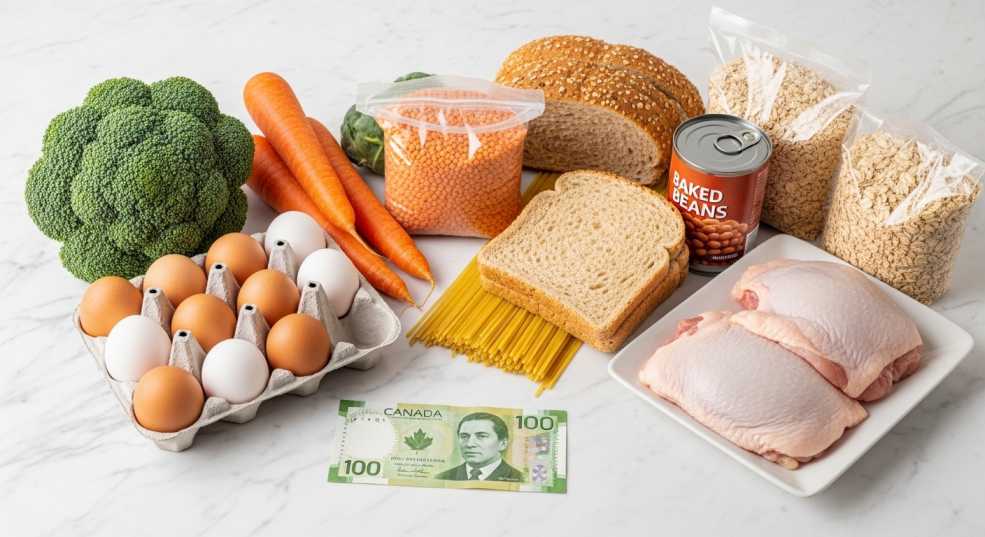
Let’s be honest — grocery shopping in Canada in 2025 feels like a contact sport. You walk in for a few basics, and somehow you walk out $180 lighter with only two bags to show for it. Meat prices alone have risen more than 7% year-over-year as of late 2025, and Canada’s Food Price Report projects overall grocery costs will climb 3–5% this year, with a family of four now spending a record-breaking $16,834 annually on food. (Statistics Canada)
So when someone says you can feed yourself well for $100 a week — about $14.30 per day — it sounds either impossible or like it requires surviving on instant ramen. It’s neither.
With intentional meal planning, a smart shopping strategy, and a little flexibility, $100 a week for one person is not just achievable — it’s actually quite comfortable. This guide will walk you through everything: the mindset shift you need, a complete week-long meal plan, a real shopping list with approximate Canadian prices, and the tricks seasoned frugal shoppers in Canada have been using for years.
Whether you’re a student, a new Canadian trying to navigate unfamiliar grocery stores, or simply someone tired of watching their food budget spiral out of control, this guide was written with you in mind.
Why $100 a Week Is the Right Target for One Person in Canada
Before we build your meal plan, it helps to anchor this budget in reality. According to data from the Montreal-based non-profit Alima, the estimated cost of nutritious food for a man living alone in Canada was approximately $101 per week as of October 2025 — and about $80 per week for a woman. (Concordia University, Eating Well on a Budget)
That means $100 per week puts you right in the realistic range for nutritious, complete eating — not luxury, but not deprivation either. The goal here is balanced, satisfying meals, not just caloric survival.
It also bears noting that Canadians who plan their meals, shop discount stores, and use loyalty programs consistently report reducing their grocery spend by up to 30% compared to unplanned shopping. (Canada.ca Food Guide) A $100 weekly budget is entirely within reach if you apply even a few of the strategies in this article.
Step 1: Set Up Your Budget Before You Set Foot in the Store
The single biggest predictor of whether you’ll stay under $100 isn’t what you buy — it’s whether you walk in with a plan. Here’s how to frame your budget before you shop:
Break $100 into categories:
Think of your $100 as roughly allocated like this:
- Proteins (chicken, eggs, lentils, beans): ~$25–$30
- Produce (fresh and frozen vegetables, fruit): ~$20–$25
- Grains and starches (rice, pasta, oats, bread): ~$15–$18
- Dairy and alternatives (milk, cheese, yogurt): ~$12–$15
- Pantry staples and extras (canned goods, oil, spices, condiments): ~$10–$15
Notice this leaves a small buffer. That’s intentional — you’ll almost always find a small unexpected item or a sale you want to take advantage of.
Check your pantry first. Before you write a single item on your list, audit what you already have. Oils, spices, pasta, rice, canned goods — these are often already sitting in your cupboard, and not accounting for them is how people blow their budgets on things they don’t need.
Step 2: Build Your Weekly Meal Plan (The Smart Way)
The most effective meal plans are built around ingredients, not individual dishes. This is the key mental shift that separates budget eaters who feel deprived from those who actually eat well.
Here’s the principle: choose 2–3 versatile proteins, 4–5 vegetables, and 2–3 grains for the week — then build meals that rotate and reuse them creatively. One whole chicken, a bag of lentils, and a dozen eggs can power an enormous variety of satisfying meals across seven days.
Sample 7-Day Meal Plan for One Person
Below is a full week of meals built around a single $100 grocery shop. Breakfasts are intentionally simple and repeatable — your mental energy is better spent on dinner variety.
MONDAY
- Breakfast: Oatmeal with banana and a drizzle of honey
- Lunch: Lentil soup (batch-cooked on Sunday) with whole grain bread
- Dinner: Baked chicken thighs with roasted broccoli and brown rice
TUESDAY
- Breakfast: Scrambled eggs with toast
- Lunch: Leftover chicken rice bowl with hot sauce and a fried egg
- Dinner: Pasta with canned tomatoes, garlic, olive oil, and chickpeas (pasta e ceci)
WEDNESDAY
- Breakfast: Oatmeal with frozen berries
- Lunch: Leftover pasta with a side salad (cabbage, carrots, vinegar dressing)
- Dinner: Stir-fried tofu or canned tuna with frozen vegetables and rice
THURSDAY
- Breakfast: Eggs with leftover rice as fried rice
- Lunch: Lentil soup (second portion from Sunday’s batch)
- Dinner: Baked potato with canned beans, shredded cheese, and Greek yogurt instead of sour cream
FRIDAY
- Breakfast: Yogurt with granola and frozen fruit
- Lunch: Egg salad sandwich on whole grain bread
- Dinner: One-pot chicken and vegetable soup using leftover chicken bones (from Monday)
SATURDAY
- Breakfast: Pancakes made from scratch (flour, egg, milk, baking powder)
- Lunch: Tomato soup with grilled cheese
- Dinner: Lentil dal with rice and naan bread (store-bought or homemade)
SUNDAY
- Breakfast: Overnight oats with nut butter
- Lunch: Leftovers cleared from the fridge
- Dinner: Frittata with whatever vegetables remain + toast
Step 3: Write Your Grocery List — And Price It Out
Here’s a realistic shopping list for this meal plan, with approximate prices based on major Canadian discount grocery chains (No Frills, Food Basics, Walmart, Superstore) as of early 2026. Prices will vary slightly by province.
TABLE 1: Sample $100 Weekly Grocery List for One Person (Canada, 2025–2026)
| Category | Item | Approx. Cost (CAD) |
|---|---|---|
| Protein | Chicken thighs (1 kg) | $8.00–$10.00 |
| Protein | Eggs (12-pack) | $4.50–$5.50 |
| Protein | Dried lentils (1 kg bag) | $3.50–$4.50 |
| Protein | Canned chickpeas (2 × 540ml) | $3.00–$4.00 |
| Protein | Canned tuna (2 × 170g) | $4.00–$5.00 |
| Produce | Broccoli (1 head) | $2.50–$3.50 |
| Produce | Bananas (bunch) | $1.50–$2.00 |
| Produce | Cabbage (1 head) | $2.00–$3.00 |
| Produce | Carrots (2 lb bag) | $2.00–$2.50 |
| Produce | Potatoes (5 lb bag) | $4.00–$5.00 |
| Produce | Frozen mixed vegetables (1 kg) | $3.50–$4.50 |
| Produce | Frozen berries (600g) | $4.50–$5.50 |
| Grains | Brown rice (2 kg) | $4.00–$5.00 |
| Grains | Pasta (900g) | $2.50–$3.00 |
| Grains | Rolled oats (1 kg) | $3.00–$4.00 |
| Grains | Whole grain bread (loaf) | $3.50–$4.50 |
| Dairy | Milk (2L) | $4.00–$5.00 |
| Dairy | Block cheddar cheese (400g) | $6.00–$8.00 |
| Dairy | Plain Greek yogurt (750g) | $5.00–$6.50 |
| Pantry | Canned diced tomatoes (2 × 796ml) | $4.00–$5.00 |
| Pantry | Olive oil or canola oil (already owned or $6 if needed) | $0–$6.00 |
| Pantry | Garlic (1 bulb) | $0.75–$1.00 |
| Buffer | Miscellaneous / sale items | ~$5.00–$8.00 |
| ESTIMATED TOTAL | $80–$100 |
Note: Prices reflect approximate ranges at discount grocery stores (No Frills, Food Basics, Walmart Supercentre, Real Canadian Superstore). Prices in Northern Canada or remote communities may be significantly higher.
Step 4: Shop Strategically — Where and How You Buy Matters as Much as What You Buy
Having your list is half the battle. Here’s how to make the most of every dollar once you’re in the store (or shopping online).
Choose the Right Stores
Not all grocery stores are created equal when you’re on a tight budget. In Canada, the most budget-friendly options typically include:
Discount chains like No Frills, Food Basics, Walmart Supercentre, and Real Canadian Superstore consistently offer lower base prices than traditional grocery stores. President’s Choice (PC) and No Name brand products, both under the Loblaws umbrella, often come from the same suppliers as national brands and can save you 15–30% per item.
Ethnic grocery stores in larger cities are frequently overlooked goldmines. Asian supermarkets, South Asian grocers, and Caribbean food stores often sell bulk lentils, rice, spices, and fresh produce at significantly lower prices than mainstream chains.
Apps like Flipp let you browse all local grocery flyers at once and search for the best price on any specific item — a genuine game-changer for budget shoppers. You can also use the Flashfood app (available at many Loblaw-banner stores) to buy food approaching its best-before date at deep discounts — often 50% off or more.
Use Loyalty Points Strategically
The PC Optimum program (Loblaws, No Frills, Real Canadian Superstore, Shoppers Drug Mart) is one of the most generous loyalty programs in Canadian retail. By scanning your card on every eligible purchase and watching for “Spend $X, earn Y bonus points” events, you can realistically redeem $10–$20 worth of groceries every month or two without changing what you buy. The Scene+ program at Sobeys/IGA is similarly worth using.
Timing Your Shop
Many stores markdown meat and bakery items in the evening as products approach their best-before date. If your schedule allows, shopping on weekday evenings can surface significant discounts on items that freeze beautifully.

Step 5: Master Batch Cooking and Strategic Leftovers
Here’s the uncomfortable truth about budget meal planning that most guides skip over: the plan only works if you actually cook. And cooking every single night from scratch is exhausting, which is why batch cooking is the backbone of any sustainable $100-a-week approach.
The Sunday Reset: Spend 60–90 minutes on Sunday doing three things: cook a pot of lentil soup or dal, cook a large batch of rice or grains, and roast or prep any vegetables that might otherwise go bad mid-week. These three elements become the building blocks of at least 4–5 meals throughout the week with minimal extra effort.
Think in components, not dishes. Brown rice isn’t just a side dish — it’s Monday’s dinner, Tuesday’s fried rice, Thursday’s grain bowl base, and Saturday’s dal vehicle. When you cook enough for 4 servings of rice at once, you’ve done the hard work once and eaten well four times.
The “planned leftover” approach. The meal plan above was designed so that Sunday’s batch cooking powers Monday and Thursday’s lunches, and Monday’s chicken creates both Tuesday’s leftovers AND Friday’s soup stock. This isn’t about eating the same meal twice — it’s about transforming it.
Step 6: Avoid the Budget-Busting Traps
Even with the best plan, certain habits can quietly derail a $100 budget. Here are the most common ones — and how to sidestep them.
Pre-cut or pre-seasoned anything. Pre-washed salad kits, pre-marinated meats, grated cheese, and seasoned rice pouches are enormously convenient — and enormously expensive per serving. A whole head of broccoli is always cheaper than broccoli florets. A block of cheddar costs significantly less than shredded cheddar in a bag.
Shopping hungry. It sounds like a cliché because it’s been proven repeatedly: shopping on an empty stomach leads to more impulse purchases, especially in the snack and convenience food aisles. Eat first, always.
Buying bulk items you won’t realistically use. Bulk buying only saves money if you use the product before it expires or goes stale. A 5 kg bag of flour is a terrible deal if you don’t bake and half of it ends up in the trash.
Ignoring unit prices. The “sale” badge on a product doesn’t mean it’s actually the best deal. Always compare the unit price (price per 100g, per litre, etc.) printed on the shelf tag, especially when comparing different sizes of the same product.
How $100 Compares: A Realistic Budget Breakdown
TABLE 2: Weekly Food Budget Comparison for One Person in Canada (2025)
| Budget Level | Weekly Spend (CAD) | What It Looks Like |
|---|---|---|
| Bare minimum | $50–$65 | Basic staples only, very limited variety, requires significant cooking skill |
| Frugal but comfortable | $80–$100 | Balanced nutrition, some protein variety, occasional treats — this guide’s target |
| Average Canadian solo diner | $100–$130 | More flexibility, convenience items, some name brands |
| Relaxed / no budget focus | $150–$200+ | Convenience foods, premium items, minimal meal planning |
Sources: Alima (Montreal non-profit food cost tracking), Statistics Canada Survey of Household Spending 2023, Canada’s Food Guide
Smart Protein Swaps That Won’t Sacrifice Nutrition
One of the fastest ways to blow a grocery budget is leaning too heavily on expensive proteins. Here’s how to get adequate protein on a $100 budget without eating chicken every single night.
Dried lentils are arguably the single best value protein in any Canadian grocery store — approximately $3.50–$4.50 for a 1 kg bag that provides roughly 20+ servings of cooked lentils, each with 9–18 grams of protein depending on portion size. Canada’s Food Guide specifically notes that legumes like lentils and beans “are inexpensive protein foods” and recommends using them several times per week. (Health Canada Food Guide)
Eggs remain one of the most cost-efficient complete proteins available, with a 12-pack hovering around $4.50–$5.50 at discount stores. A two-egg breakfast costs roughly $0.80, making it one of the most nutritionally dense, budget-friendly meals you can prepare in under five minutes.
Canned tuna and salmon — particularly the PC or No Name store brands — provide excellent omega-3s and protein at roughly $2.00–$2.50 per can, each containing 2–3 servings. Chicken thighs (bone-in, skin-on) are consistently the cheapest cut of chicken in Canada and are frankly more flavourful than chicken breast anyway. Look for them on sale at $6.00–$8.00/kg and freeze extras.
A Note on Regional Price Variation Across Canada
It would be misleading to present a single $100 budget as universally achievable across all of Canada without acknowledging provincial and geographic variation. In major urban centres like Toronto, Vancouver, and Calgary, discount grocery stores are plentiful and competitive, making this budget very realistic. In mid-sized cities like Halifax, Winnipeg, Saskatoon, and Ottawa, it’s often even easier to stay under $100 with a bit of planning.
However, Canadians living in rural areas, remote communities, or in the North — particularly Nunavut, the Northwest Territories, and parts of northern Ontario and Quebec — face dramatically higher food costs due to transportation challenges. In Nunavut, basic staples can cost three to four times what they do in southern cities, and a $100-a-week budget may be inadequate regardless of planning skill.
If you’re in a higher-cost region, the strategies in this guide still apply — but your baseline expectations should be adjusted accordingly.
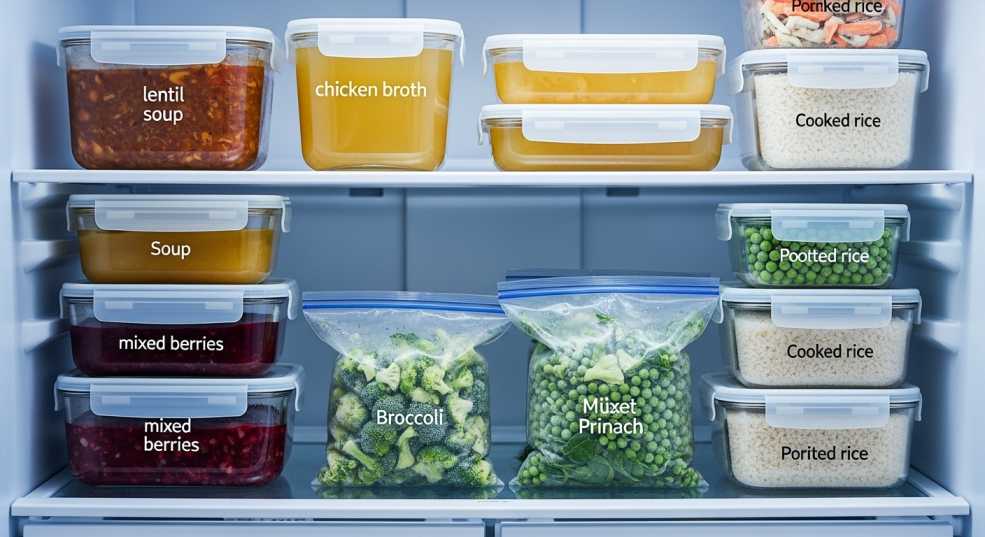
The Freezer Is Your Best Friend
No conversation about budget meal planning in Canada is complete without talking about the freezer as a financial asset. A bag of frozen peas, corn, or mixed vegetables costs $3–$5 and delivers the same nutritional value as fresh equivalents — often more, since frozen produce is flash-frozen at peak ripeness. Frozen vegetables also eliminate the frustration of fresh produce going bad mid-week, which is a silent budget killer.
Batch-cooked meals like lentil soup, dal, rice and beans, and meat sauces freeze exceptionally well. If you find yourself cooking a pot of lentil soup, doubling the recipe and freezing half costs almost nothing in extra effort and gives you a ready-made meal two weeks from now when you’re tired and tempted to order takeout.
When proteins go on sale — and they will, regularly — buy extra and freeze immediately. Chicken thighs, ground turkey, and pork shoulder go on sale frequently at Canadian discount grocery stores, and they all freeze beautifully for 3–4 months.
Quick-Win Tips You Can Apply This Week
You don’t need to overhaul your entire kitchen routine overnight. Here are several changes you can make immediately that will have an impact on your grocery bill this week:
Download the Flipp app and spend five minutes before shopping to check your local flyers. Build your meal plan around what’s on sale rather than the other way around — this one habit alone can save $10–$20 per week.
Switch at least two items in your cart to No Name or PC brand. Start with pantry staples — canned tomatoes, olive oil, oats, pasta — where quality differences are minimal. The savings add up faster than you’d expect.
Cook a big pot of something on Sunday. It doesn’t have to be elaborate. A pot of lentil soup or a rice and bean dish takes about 30 minutes active time and powers at least three meals through the week.
Plan your proteinsecond. Most people plan meals starting with the protein (“I’ll have chicken Monday, salmon Tuesday…”), which leads to expensive, inflexible plans. Instead, plan around what produce and staples are on sale, and let the protein follow.
Conclusion: $100 a Week Is a Skill, and Skills Get Easier With Practice
Feeding yourself well on $100 a week in Canada isn’t a matter of deprivation — it’s a matter of intention. The single biggest insight from this guide is this: the gap between spending $80 and $180 a week on groceries almost never comes down to what you need to eat. It comes down to whether you planned, when and where you shopped, and how many impulse decisions you made along the way.
The strategies in this guide work because they’re grounded in how Canadian grocery stores and prices actually work in 2025 and 2026 — not generic advice that assumes you can buy a pound of ground beef for $3.
To summarize what we’ve covered:
- A $100 weekly budget for one person in Canada is realistic and nutritionally sound — right in line with data from non-profits like Alima and Canada’s Food Guide.
- The key is building your meal plan around versatile ingredients that can be repurposed across multiple meals throughout the week.
- Shopping at discount grocery stores (No Frills, Food Basics, Walmart Supercentre, Real Canadian Superstore), using apps like Flipp and Flashfood, and leveraging PC Optimum loyalty points are the highest-impact tactics available to Canadian budget shoppers.
- Batch cooking on Sundays and using the freezer strategically are what make the plan sustainable long-term.
- Protein doesn’t have to be expensive — lentils, eggs, canned tuna, and bone-in chicken thighs are your best allies.
Start small. Pick just two or three changes from this guide to implement this week. Track your receipts. Adjust as you go. Within a month, spending $100 a week on groceries will start to feel not like a constraint, but like a habit you’re proud of.
Sources & Further Reading:
