

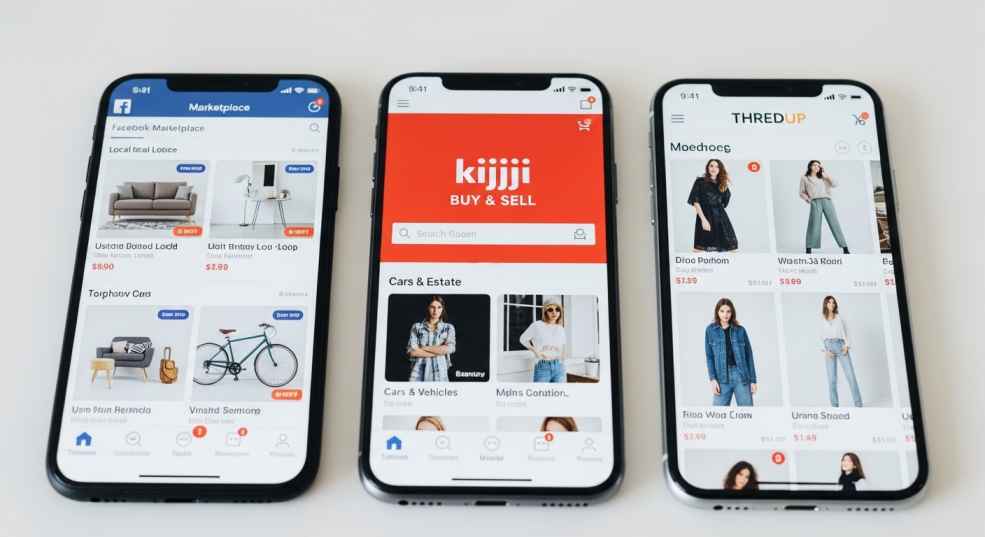
Have you ever wondered why some Canadians seem to score amazing deals on second-hand items while you’re left scrolling endlessly through listings? The secret isn’t luck—it’s knowing which platform to use for what you’re buying.
Last month, I helped my neighbour Sarah furnish her entire apartment for under $800. The catch? She used three different platforms strategically. A vintage dresser from Facebook Marketplace for $120, a pristine sectional sofa from Kijiji for $350, and designer clothes from ThredUp for pocket change. Each platform excelled at something different.
In this comprehensive guide, I’ll show you exactly where to find the best deals based on what you’re shopping for. Whether you’re hunting for furniture, fashion, electronics, or kids’ items, you’ll learn which platform gives you the most bang for your buck—and which ones to avoid for certain purchases.
The Current State of Second-Hand Shopping in Canada
The resale market in Canada has exploded. According to recent data, Canadians are increasingly turning to online platforms to buy and sell pre-owned items, driven by both economic pressures and environmental consciousness.
Here’s what’s happening right now:
Facebook Marketplace has dramatically overtaken Kijiji in user engagement, with sellers reporting 7-8 times more responses on Facebook compared to Kijiji for the same listings. One Canadian seller posted identical items on both platforms and received 236 clicks on Facebook versus just 13 on Kijiji within the same week.
While Kijiji maintains authority for high-stakes categories like vehicles and long-term apartment rentals due to its detailed filters and serious buyer intent, Facebook Marketplace has captured the crown for everyday items and local deals. The platform’s 300+ million global monthly visitors and seamless integration with social profiles make it the go-to choice for quick, local transactions.
ThredUp, meanwhile, carved out a different niche entirely. Launched in Canada in 2017, ThredUp targets fashion-conscious shoppers who want branded clothing at up to 90% off retail prices. With over 55,000 brands from Gap to Gucci, it appeals to those seeking quality over the treasure-hunt experience of local marketplaces.
Platform Overview: Key Differences at a Glance
Before diving deep, let’s clarify what sets these three platforms apart:
Comparison Table 1: Platform Basics
| Feature | Facebook Marketplace | Kijiji | ThredUp |
|---|---|---|---|
| Type | Peer-to-peer local marketplace | Classified ads platform | Curated online thrift store |
| Best For | Quick local sales, furniture, kids’ items | Vehicles, real estate, job listings | Women’s & kids’ fashion only |
| Listing Fee | Free | Free (paid boost options) | N/A (they buy inventory) |
| Shipping | Local pickup only | Mostly local, some shipping | All shipping (to Canada starts $11 USD) |
| User Base | 3 billion Facebook users globally | 14 million monthly Canadian visitors | 80+ million registered users |
| Transaction Type | Direct peer-to-peer | Direct peer-to-peer | Consumer-to-business |
| Payment Methods | Cash, e-transfer arranged privately | Cash, e-transfer arranged privately | Credit card, PayPal |
| Seller Protection | Limited (relies on Facebook profiles) | None | Company handles all transactions |
| Setup Time | Instant (if you have Facebook) | 5-10 minutes account creation | Shopping only (no selling for Canadians yet) |
Comparison Table 2: What Each Platform Does Best
| Category | Facebook Marketplace | Kijiji | ThredUp |
|---|---|---|---|
| Furniture | ⭐⭐⭐⭐⭐ Best | ⭐⭐⭐⭐ Very Good | ❌ Not available |
| Fashion/Clothing | ⭐⭐⭐ Good for basics | ⭐⭐ Limited selection | ⭐⭐⭐⭐⭐ Best for brands |
| Electronics | ⭐⭐⭐⭐ Very Good | ⭐⭐⭐⭐ Very Good | ❌ Not available |
| Vehicles | ⭐⭐⭐ Good for under $10k | ⭐⭐⭐⭐⭐ Best | ❌ Not available |
| Kids’ Items | ⭐⭐⭐⭐⭐ Best | ⭐⭐⭐⭐ Very Good | ⭐⭐⭐⭐ Good for clothing |
| Home Decor | ⭐⭐⭐⭐⭐ Best | ⭐⭐⭐⭐ Very Good | ❌ Not available |
| Response Speed | ⭐⭐⭐⭐⭐ Within hours | ⭐⭐ May take days | ⭐⭐⭐⭐ Order ships quickly |
| Scam Risk | ⭐⭐⭐ Medium (profiles help) | ⭐⭐ Higher (anonymity) | ⭐⭐⭐⭐⭐ Very low (vetted) |
Facebook Marketplace: The King of Local Deals
How It Works
Facebook Marketplace leverages your existing social network. When you list an item, it’s visible to people in your geographic area, and they can see your Facebook profile before contacting you. This creates a layer of accountability that purely anonymous platforms lack.
The Selling Process:
- Open Facebook app and click the Marketplace icon
- Upload 1-10 photos of your item
- Add title, description, price, and category
- Choose your location radius (1-100 km)
- Post to Marketplace and optionally share in local buy/sell groups
- Respond to messages and arrange pickup
What Makes Facebook Marketplace Excel
Visibility is unmatched. Real-world data shows Facebook Marketplace generating 323 clicks in the same timeframe that Kijiji produced just 14 clicks for identical listings. The algorithm actively promotes your listings to users who have shown interest in similar items.
Social accountability reduces scams. You can review a buyer or seller’s profile history, mutual friends, and how long they’ve been on Facebook. This transparency makes sketchy transactions less common than on anonymous platforms.
The “Is This Available?” phenomenon. Yes, you’ll get dozens of automated-sounding messages asking if your item is still available. But here’s the reality: higher volume means faster sales. One seller reported that despite the time-wasting messages, they still sold their item the same day they listed it.
Multi-group posting amplifies reach. When creating a listing, Facebook suggests relevant buy/sell groups where you can cross-post simultaneously. Music equipment sellers report being able to post to 18+ specialized groups with one listing.

Where Facebook Marketplace Falls Short
Shipping isn’t an option. This is strictly a local pickup platform. If you’re not near a major Canadian city, your options shrink dramatically.
Category organization is chaotic. Users report that Facebook’s algorithm doesn’t show all relevant listings when browsing specific categories—you might see a guitar ad on the general marketplace page that doesn’t appear when searching the bass/guitar category.
No built-in payment protection. Unlike platforms with escrow services, you’re arranging cash or e-transfer on your own. Meet in public places and trust your instincts.
Requires active Facebook account. If you’ve deleted Facebook or prefer not to have an account, you’re out of luck.
Best Use Cases for Facebook Marketplace
✅ Furniture and large items – Free, fast, and local buyers come to you ✅ Kids’ items and toys – Extremely active market of local parents ✅ Quick sales under $200 – Speed trumps maximizing price ✅ Home décor and small appliances – Great for trending items ✅ Exercise equipment – High demand, especially post-January
❌ Avoid for: Vehicles over $5,000 (use Kijiji), designer fashion (use ThredUp), anything requiring shipping
Kijiji: The Traditional Classifieds Powerhouse
How It Works
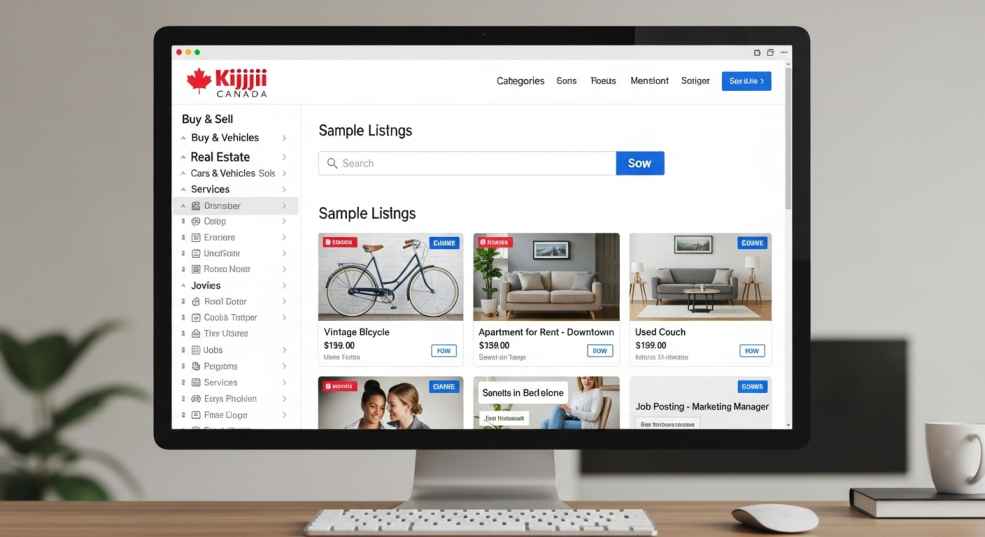
Kijiji remains Canada’s number one classified site with 14 million unique monthly visitors. It functions like traditional newspaper classifieds but online, with categories spanning jobs, real estate, vehicles, electronics, furniture, and more.
The Selling Process:
- Create free Kijiji account
- Select category and location
- Upload photos and write detailed description
- Set price and contact preferences (email/phone)
- Optional: Pay for ad boosts or premium placement
- Respond to inquiries and arrange sale
What Makes Kijiji Stand Out
Serious buyers for high-value items. For high-stakes categories like vehicles and long-term apartment rentals, Kijiji remains the top destination due to its powerful filters and the serious intent of its users. Car buyers expect detailed specifications, and Kijiji’s format accommodates this better than Facebook’s casual interface.
Kijiji Autos is exceptional. Launched in November 2018, Kijiji Autos operates as a separate car shopping platform with huge volumes of private seller listings. It’s designed specifically for vehicle transactions with VIN lookups, history reports, and detailed comparison tools.
Better search and filtering. You can narrow searches by exact specifications—screen size for TVs, breed for pets, square footage for apartments. This granular control beats Facebook’s sometimes-erratic search algorithm.
Less social pressure. Some people prefer the anonymity. You don’t need friends or followers to be credible—just a good listing and fair price.
Analytics for sellers. Kijiji provides data on how many views and clicks your ad receives, helping you adjust pricing or descriptions.
Where Kijiji Struggles
Lower traffic than it once had. Multiple sellers report dramatically lower response rates on Kijiji compared to Facebook Marketplace, with some experiencing 90% fewer inquiries for identical listings.
Pay-to-play dynamics. Commercial sellers dominate by paying for Top Ads, causing regular user ads to get relegated quickly to the back pages. Your free listing might be buried within hours.
Higher scam risk. The anonymity that some prefer also enables more fraudulent activity. Sellers report more lowball offers and no-show buyers on Kijiji versus Facebook.
Email-based communication feels outdated. You’re juggling email threads instead of the instant messaging that Facebook and modern apps provide.
Best Use Cases for Kijiji
✅ Vehicles and automotive – Unmatched for serious car buyers ✅ Real estate and apartments – Best filters and serious renters ✅ Professional services – Many businesses advertise here ✅ Items over $500 – Attracts buyers willing to pay fair prices ✅ Job listings – Still widely used by Canadian employers
❌ Avoid for: Furniture under $100 (Facebook is faster), trendy clothing (low demand), items needing quick sale
ThredUp Canada: The Online Fashion Specialist
How It Works
ThredUp operates fundamentally differently from Marketplace and Kijiji. It’s not peer-to-peer—ThredUp buys inventory from sellers, curates it, and resells through their online store. ThredUp launched Canadian shipping in 2017, allowing Canadians to shop their curated selection but not yet sell directly to the platform.
The Shopping Process:
- Browse by category, brand, size, color, style, and condition
- Items reserved in your cart for 24 hours (no one can steal them)
- Multiple photos and detailed measurements provided
- Filter by condition: Like New, Excellent, Good
- Checkout with credit card or PayPal
- Shipping to Canada starts at $11 USD
The Selling Process (Currently US Only): ThredUp sends you a prepaid bag to fill with clothing. They process items, list what meets their standards, and pay you a percentage of the sale. Rejected items are recycled or returned (for a fee). Canadian consignment is not yet available.
What Makes ThredUp Unique
Professionally curated fashion. Over 2 million pieces online at any given time with 30,000+ new arrivals daily. You’re shopping a constantly refreshed inventory that’s been quality-checked, photographed professionally, and described accurately.
Legitimate designer pieces. From fast fashion brands like H&M and Zara to luxury names like Gucci, Louis Vuitton, and Burberry—all authenticated. One shopper found vintage Louis Vuitton and Reformation dresses described as “in excellent condition, you might mistake it for brand new”.
No haggling or meetups. Pay the listed price, and it ships to your door. No dealing with lowballers, no-shows, or sketchy parking lot transactions.
Environmental storytelling. ThredUp markets heavily around sustainability. Each purchase shows the environmental impact you’ve saved (water, CO2, landfill waste).
Flexible return policy. Unlike peer-to-peer sales where all sales are final, ThredUp offers returns—though you’ll pay return shipping.
Where ThredUp Disappoints
Canadian shoppers face extra costs. Canadians report paying for the item, shipping, taxes, and then customs duties upon delivery, making purchases significantly more expensive than anticipated. What looks like a $30 deal can become $55 after all fees.
Selling not available in Canada yet. You can’t consign your clothes if you’re Canadian. ThredUp only accepts items from US addresses currently, limiting the circular economy potential.
Inconsistent condition ratings. Multiple reviewers report receiving items in worse condition than described—”excellent” items arriving with holes, stains, or significant wear. The automated measurement system using “computer vision” has proven unreliable, with discrepancies of 6+ inches reported.
Payout structure frustrates sellers (US only for now). Sellers report receiving pennies for brand-name items—one received $0.68 for a Chico’s tee shirt listed as “very good condition”. Most items are rejected and recycled without seller consent.
Returns are costly. ThredUp charges $11 return shipping plus a $3.99 restocking fee PER garment. Returning six items that didn’t fit costs you $48 on top of the lost purchase price.
Best Use Cases for ThredUp
✅ Designer fashion bargains – Authentic luxury at fraction of retail ✅ Specific brands you love – Search by brand makes finding pieces easy ✅ Building sustainable wardrobe – Quality over quantity approach ✅ Women’s and kids’ clothing – Exclusively focused on these categories ✅ Avoiding meetups – Shop from couch, delivered to door
❌ Avoid for: Furniture, electronics, men’s clothing, or if you want to sell items as a Canadian
Real-World Price Comparison: What You’ll Actually Pay
Let’s look at actual prices for common items across all three platforms based on current 2026 Canadian listings:
Price Comparison Chart: Sample Items
| Item Category | Facebook Marketplace | Kijiji | ThredUp |
|---|---|---|---|
| IKEA Malm Dresser (used) | $80-120 | $100-150 | N/A |
| iPhone 12 (64GB, good condition) | $300-400 | $350-450 | N/A |
| Lululemon Align Leggings (like new) | $40-60 | $50-70 | $45-65 (+ shipping/duties) |
| Kids’ Winter Jacket (North Face) | $30-50 | $40-60 | $35-55 (+ shipping/duties) |
| Office Desk Chair | $50-100 | $75-125 | N/A |
| Women’s Designer Handbag (Coach) | $80-150 | $100-180 | $75-200 (+ shipping/duties) |
| PlayStation 5 Console (used) | $400-500 | $450-550 | N/A |
| Dining Table Set (seats 6) | $150-300 | $200-400 | N/A |
For local items (furniture, electronics, kids’ gear), Facebook Marketplace typically offers the lowest prices due to motivated sellers wanting quick sales. Kijiji prices run 10-25% higher but attract more serious buyers. ThredUp’s clothing can be competitive before shipping costs, but Canadian fees often eliminate savings.
KEY INSIGHT
Platform-by-Platform Strategy Guide
When to Use Facebook Marketplace
Time of day matters. List items Thursday-Sunday between 6-9 PM when user activity peaks. One seller who posted at 6 PM saw four of five items sold by 7:30 PM.
Photography makes or breaks sales. Take photos in natural light from multiple angles. Include a photo with measurements next to a ruler or common object for scale.
Cross-post to groups. Don’t just list on Marketplace—share to relevant local buy/sell groups. The algorithm counts each share separately, multiplying your visibility.
Price slightly below market. Buyers expect deals on Facebook. Research comparable listings and price yours 10-15% lower for fastest sale. You’ll get more low-ball offers, but volume compensates.
Respond immediately. The fastest responders win—buyers often message 5-10 sellers and go with whoever replies first. Enable notifications and respond within minutes.
When to Use Kijiji
Detail-rich descriptions win. Kijiji buyers read. Include specifications, dimensions, model numbers, purchase date, reason for selling, and condition details.
Consider paid boosts for items over $300. A $5-10 top ad boost for 3 days can result in significantly faster sales on higher-value items where the fee is negligible relative to sale price.
Refresh listings every 2-3 days. Edit your ad (change a word in the description) and repost to bump it back to the top of search results.
Specific titles matter. Instead of “Table for sale,” use “Solid oak dining table, seats 8, Mission style, excellent condition.” Buyers search specific terms.
Bundle related items. Kijiji’s layout handles multiple items well. “Moving sale: 3-piece bedroom set” attracts buyers looking for complete solutions.
When to Use ThredUp
Sign up for email alerts. ThredUp restocks constantly. Set alerts for your favorite brands in your size—items often sell within hours of posting.
Take advantage of first-time discounts. New members get 50% off their first order, making it an exceptional deal if you’ve never used the platform.
Calculate total cost before checkout. Add item price + $11 USD shipping + 5% GST + potential duties (often 15-20% on fashion). If total exceeds what you’d pay locally, skip it.
Order multiple sizes when unsure. Given the measurement inconsistencies reported, consider ordering two sizes and returning one—though factor in the $15 return cost per item.
Shop end-of-season sales. ThredUp runs major promotions seasonally where additional discounts stack on already-reduced items.
Safety and Scam Prevention
Red Flags on Facebook Marketplace and Kijiji
🚩 Buyer wants to pay extra to have someone else pick up – Classic shipping scam 🚩 Asks you to communicate off-platform immediately – Trying to avoid platform accountability
🚩 Sends you a “verification code” link – Phishing for your phone/account access 🚩 Payment via check, money order, or wire transfer – These are always scams 🚩 Deal seems too good to be true – It is. Walk away. 🚩 Buyer/seller has empty profile with no history – Created just to scam
Safety Best Practices
For in-person transactions:
- Meet in public places during daylight (police station parking lots are ideal)
- Bring someone with you for large transactions
- Accept cash or Interac e-transfer only (never checks)
- Test electronics before handing over payment
- Trust your gut—if something feels wrong, walk away
For ThredUp shopping:
- Save screenshots of item descriptions and measurements
- Photograph items immediately upon arrival
- Report discrepancies to customer service within 14 days
- Keep all packaging until you’ve inspected items thoroughly
- Use credit cards (better fraud protection than debit)
The Verdict: Which Platform Wins?
There’s no single “best” platform—each dominates different categories. Here’s my recommendation based on seven years of buying and selling second-hand in Canada:
For Quick Local Sales (Under $200)
🏆 Winner: Facebook Marketplace
The sheer volume of eyeballs on Facebook makes it unbeatable for moving items fast. Yes, you’ll field annoying “is this available?” messages, but you’ll also sell furniture in hours, not weeks.
For High-Value Items (Vehicles, Real Estate, $1000+ Items)
🏆 Winner: Kijiji
Serious buyers doing research on major purchases default to Kijiji’s detailed filters and specifications. The platform’s design accommodates the depth of information these transactions require.
For Designer Fashion and Brand-Name Clothing
🏆 Winner: ThredUp (with caveats)
If you’re shopping for specific brands and can stomach the shipping costs to Canada, ThredUp offers authenticated pieces you won’t find locally. However, calculate total costs before buying, and be prepared for condition inconsistencies.
For Kids’ Items and Toys
🏆 Winner: Facebook Marketplace
The hyperlocal network of parents buying and selling creates an incredibly active market. Kids outgrow things constantly, and Facebook makes it easy to recirculate items within your community.
For Electronics and Gadgets
🏆 Winner: Tie between Facebook Marketplace and Kijiji
Both work well. Facebook offers better prices but requires more diligence checking seller credibility. Kijiji’s detailed specifications help buyers compare exact models and conditions.
Maximizing Your Second-Hand Success
The Multi-Platform Approach: Don’t limit yourself to one platform. List furniture and household items on Facebook for quick local sales. Cross-post high-value items to Kijiji simultaneously. Shop ThredUp for specific designer pieces you can’t find locally.
Seasonal Timing: January and September see peak activity as people purge after holidays and before school. List items during these windows for maximum visibility and faster sales.
Negotiation Reality: Expect offers 20-30% below asking price on Facebook, 10-15% below on Kijiji. Price accordingly so you have room to negotiate without feeling cheated.
Payment Methods: Interac e-transfer has become the Canadian standard for amounts over $50. For furniture and large items, many buyers now prefer e-transfer before arrival to avoid carrying large amounts of cash.
The Sustainability Angle: Beyond saving money, buying second-hand keeps items out of landfills. ThredUp reports that buying one used item instead of new saves 25 pounds of CO2 emissions on average. Multiply that by regular second-hand shopping, and your environmental impact becomes significant.
Frequently Asked Questions
Q: Can I use Facebook Marketplace without a Facebook account? No, you must have an active Facebook profile to access Marketplace. Consider creating a minimal account if you want access to the platform’s deals.
Q: Why does ThredUp reject so many items when people try to sell? ThredUp maintains quality standards and only accepts items they believe will sell quickly. They prioritize trendy, current-season, brand-name pieces in excellent condition. Many sellers report 60-70% rejection rates.
Q: Is it safe to give out my address for local pickup? Many sellers meet buyers in public parking lots, police stations, or community centers instead of their homes. If you do arrange home pickup, have someone else present and never let strangers inside.
Q: Which platform has the lowest fees? Facebook Marketplace and Kijiji are both free for basic listings. ThredUp has no listing fees but takes a significant commission when items sell (in the US—Canadians can only buy, not sell currently).
Q: How do I avoid scams on peer-to-peer platforms? Use Facebook Marketplace over anonymous platforms when possible. Check profiles for history and mutual connections. Never accept checks or money orders. Meet in public. Trust your instincts.
Final Thoughts
The Canadian second-hand market offers incredible opportunities if you know where to look. Facebook Marketplace’s rise to dominance makes sense—it combines social accountability with massive reach and zero fees. But dismissing Kijiji entirely would be a mistake, especially for vehicles, real estate, and high-value items where its detailed format shines.
ThredUp fills a specialized niche for fashion enthusiasts, though Canadian shoppers should carefully calculate total costs before assuming they’re getting deals. The platform works best for building a curated wardrobe of brand-name pieces rather than scoring rock-bottom prices.
My personal strategy? I use all three. Facebook Marketplace for furniture, kids’ items, and quick local deals. Kijiji when I’m selling vehicles or searching for specialized equipment. ThredUp when I want a specific designer piece I can’t find anywhere else.
The secret isn’t finding the one “best” platform—it’s understanding what each does well and using them strategically. Armed with the comparisons, pricing data, and platform-specific tips in this guide, you’re now equipped to score better deals than 90% of Canadian second-hand shoppers.
Happy thrifting!
